
Air Filters
Air Filtration Systems and Products Designed For Ottawa Homes
Enjoy Clean Filtered Air
Furnace Filtration Systems & Filters
It is always our HVAC teams goal for you to experience total indoor air comfort. For someone with allergies or sensitivities the air inside their home can significantly impact their quality of life and their overall health. And there are also many people who just want the cleanest air possible in their home in Ottawa.
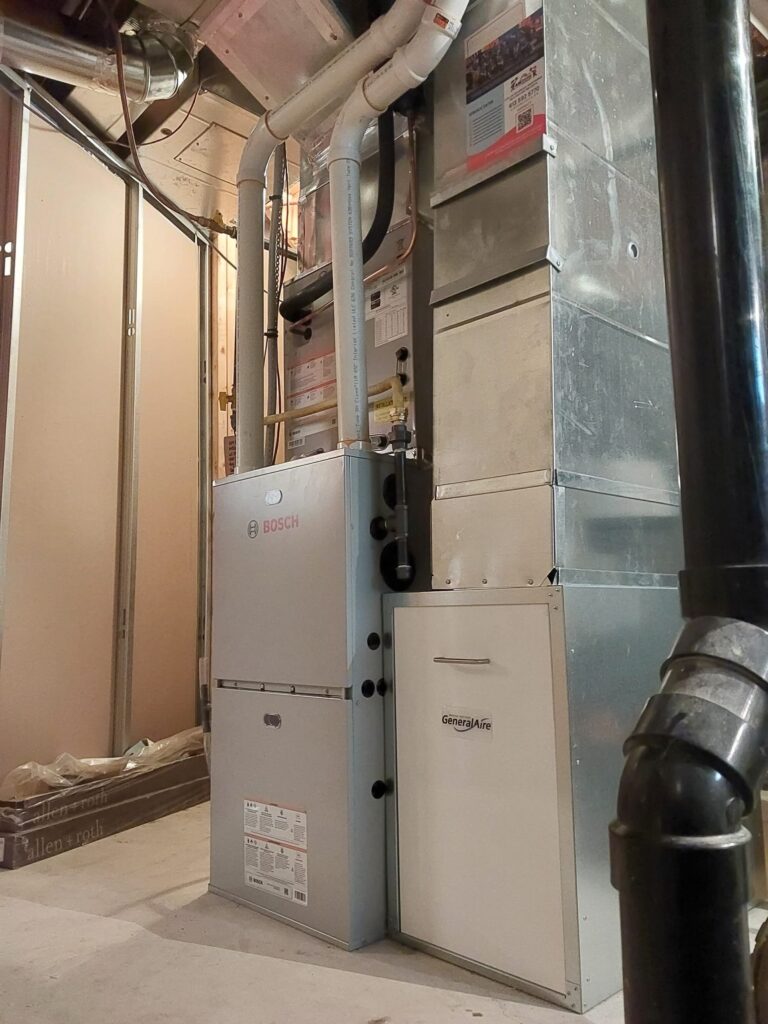
We carry an array of different solutions to ensure that your air is clean to breathe when you are at home. The easiest and most affordable solution to cleaning your air is to install a larger filter cabinet with a larger filter. This results in more particulates and other irritants being removed from the air circulation resulting in cleaner air.
Enjoy piece of mind with our HVAC filtration packages that pair with our FAMILY and FAMILY+ maintenance and protection packages.
Popular Filter Products
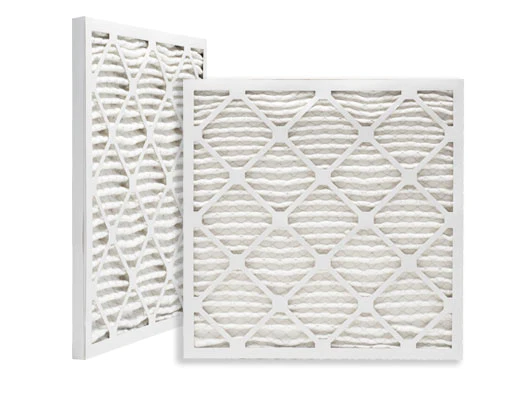
1 Inch Filter
Your basic one inch filter rack is the standard filtration for a homes HVAC system. There are different options when
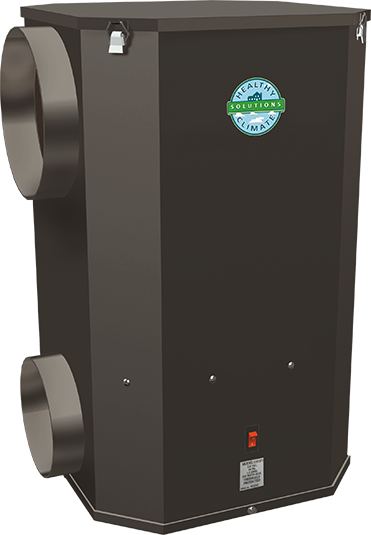
HEPA Filtration
HEPA filtration allows for hospital grade air within the home. Whole home HEPA filters are capable of removing nearly all
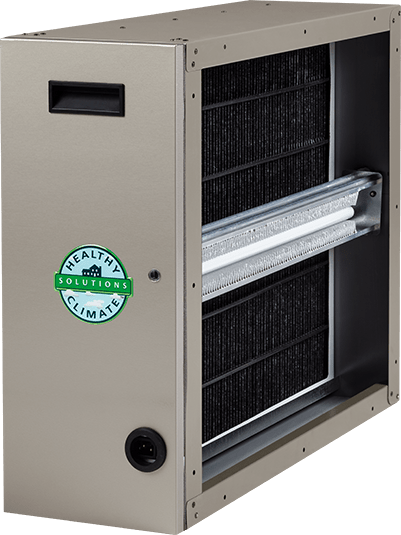
Lennox Pure Air
The Lennox Pure Air and Lennox Pure Air S are the ultimate in indoor air quality. This all in one
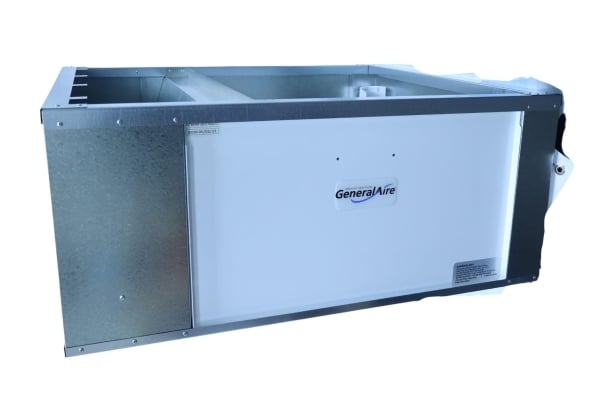
Generalaire Perfect Platform
The Generalaire Perfect Platform utilizes the same state of the art MERV 11 filter as its generalaire counterparts. This filter
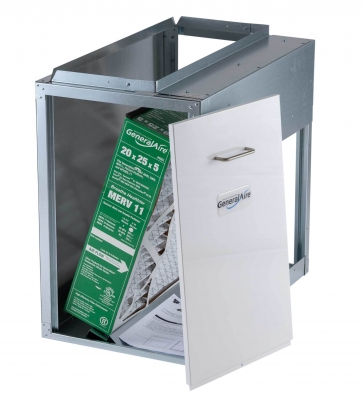
Generalaire MAC L
Our most popular filtration system! The Generalaire MAC L filter cabinet comes equipped with a MERV 11 filter to ensure
Filters are not just for your furnace!
We carry many different types of filter for Ottawa homeowners including:
Furnace / Air Handler Filters
Furnace / Air Handler
Ductless mini split filter
Ductless Mini Split
HRV / ERV Filters
HRV / ERV
Humidifier Pad Filters
Humidifier Pad
Learn About Air Filtration
Air Filter Efficiency
Efficiency of a filtration system is based on the size of the particles captured by an air filter. The filter’s MERV (Minimum Efficiency Reporting Value) number is an industry standard for rating filters. Residential filters typically have an MERV range of one to 12. Higher ratings indicate a more efficient filter. Higher filter efficiency helps clear the air and improve airflow.
Hospital Grade Filtration
We offer all in one filtration systems that purify the air to hospital grade levels. The Lennox Pureair as an example offers MERV16 filtration combined with a carbon based filter to capture 99.9% of particles in the air. Combine this with UV germicidal lighting and you have an all in one solution that guarantees to deliver pure, clean air throughout your home.
Air Filter Cost
Cost is a factor to consider when purchasing a filter. Although a high quality air filter may cost more initially, it can actually save you money over the long term. Inexpensive filters provide poor filtration thus requiring more frequent filter replacement, and are often left unchanged resulting in reduction in efficiency and possible damage to your system.
HEPA Bypass Filters
HEPA filters are another method to filter your home’s air to hospital grade levels. HEPA filters are inline systems that tie directly into your homes HVAC system. These filters have MERV ratings up to 16 and filter 99.97% of indoor particles out of the air. Many HEPA systems come equipped with carbon filters to eliminate VOCs and odours, making your homes are as clean as the outdoors!
Air Filtration FAQ
Are All Air Filters Created Equal?
Although there are several factors to consider when choosing a filtration system, common concerns for people are allergens. The more sensitive a person is to allergens, the greater the need for a high-efficiency filtration system.
We carry in stock a 5 inch filter that offers a great balance of cost, efficiency, and longevity. And of course this filter delivers comfortable air throughout your home. Check out our featured furnace and air conditioner filter systems below:
How Often Should I Change My Air Filter?
A common question we receive is how often your should change the filters in your HVAC system. This greatly depends on your home usage and type (and size) of the filter. As a general rule, your should change your air conditioner filter every 1 month. This is especially important for less expensive filters that become clogged quickly. Furnace filters should also be changed every month unless you are using a high performance 5 inch filter.
We recommend that 5″ filters be changed every three to six (3 to 6) months to ensure proper performance. For homes with pets, regular furnace and air conditioner filter replacement is extremely important! A clogged filter will result in reduced indoor air quality and put strain on your heating and cooling system. Dirty filters restrict airflow which also causes your furnace and air conditioner to work harder to push air resulting in reduced equipment lifespan and higher utility bills.
Are bigger filters better?
Often the larger the filter, the higher the MERV rating, meaning more dust is caught. Also the larger the filter the more surface area, meaning less restriction. Not all filters are created equal, speaking with a professional like AirZone HVAC Services can help you decide which filter is best.
What do furnace filters do?
Furnace filters are designed to primarily protect the furnace and its blower. They also can give the added benefit of cleaning the air in your home.
What Is A MERV Rating?
MERV rating is the system used to rate the efficiency of a filter. MERV stands for minimum efficiency reporting values and is determined by the size of particulate a filter can catch. The lower the MERV rating the larger the particles that can pass through the filter.
Standard 1 inch filters that you buy at the hardware store generally range from 6-11 in MERV rating. AirZone HVAC Services always recommends at least a MERV 11 fitler on the furnace to ensure not only the purity of the air in your home but also to protect the blower of the furnace from becoming caked with dust and debris. MERV 13 and even MERV 16 fitlers are available to those who are concerned about the quality of the air in the home. These filters aid in delivering hospital grade air throughout the home.
What is The Ideal MERV Rating For Ottawa Homes?
Of course we all want pure, clean air in our homes but as HVAC designers we must caution our clients on the restriction certain filters can cause. The higher the MERV rating, naturally, the more restrictive the filter becomes. This can mean poor airflow throughout your home and can also damage your heating and cooling systems.
MERV 11-MERV13 1 inch filters are very popular in hardware stores today. These filters are extremely restrictive and we always caution consumers about using these. Allow an expert from AirZone HVAC to aid you in finding a filtration system that not only cleans your air but also suits your home’s HVAC system.
Why is my filter black?
We often hear customers complaining of black furnace filters. This is almost always caused by burning candles or a wood fireplace. More often than not the scented candles leave a black residue on the furnace filter. If you are concerned about the quality of air in your home, schedule an indoor air quality inspection with AirZone HVAC Services.
What happens if I don't change my filter?
- Frozen air conditioner coil
- Water leakage
- Lack of air flow
- Burn out motor (no air flow)
- High limit switch tripped (furnace turns off)
- Loud fan
The longevity and efficiency of your HVAC system depends on a filter change at the appropriate time.
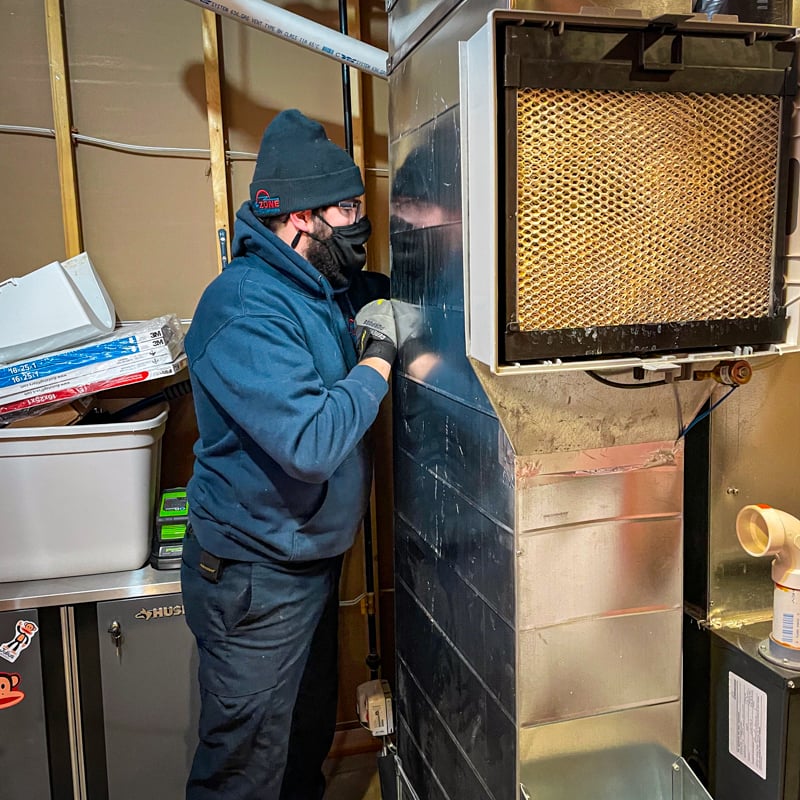
Furnace Air Filters in Ottawa
With so many diverse heating and cooling systems in Ottawa and the Valley there are many different types of furnace air filters that we come across in the field. As we have outlined above the most important requirement for a furnace air filter is that it is changed regularly. But the frequency is also changed based on the size of the filter.
We install a lot of upgraded filter cabinets that allow for a larger 5 inch filter to be installed. The advantage of this filter is that it has more surface area on the filter itself. For example, picture a typical 1 inch filter and a 5 inch filter side by side. They both are made with a zig zag pattern almost like an accordion. Now imagine that both of these filters are stretched out and flat. The 5 inch filter is huge in comparison to the one inch furnace filter! Now imaging air being blown through both of these filters.
We hope this illustration shows just how much of a difference a larger filter can make versus a smaller one. The major advantage of the larger filter is that by distributing the air over a larger area there is not as much of a need for a tighter filter. Now think about the furnace efficiency for a second. Most Ottawa homeowners want the best air quality. Although a tighter and more restrictive fitler will provide better filtration resulting in cleaner air, this happens at the expense of efficiency. The furnace now has to work harder to push air through the fitler. By expanding the surface area of the fitler a less restrictive filter is no longer required to achieve the same result. This is why we typically recommend an upgraded furnace filter cabinet in Ottawa to our customers.
Honest advice from Ottawa’s leader in indoor air quality!
Fast and FREE Air Filtration System Quotes
Get started today with a free no obligation quote for new equipment.